
CLIENT CASE STUDY
How I Helped Three Authors Write and Publish Their Leadership Book
Inside the process of bringing a legacy-building book to life – from initial idea to final publication.
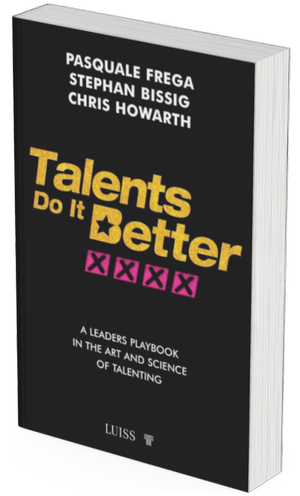
“Our book is beyond expectations.”
“We would like to express our heartfelt gratitude to Allegra, whose extraordinary support has helped to bring this book to life. From the very beginning, she approached this project with sensitivity, curiosity and genuine care for the ideas we wanted to share. Allegra had the rare ability to listen deeply, capture the spirit behind every conversation and translate it into words that feel authentic and meaningful. What began as thoughts, notes and discussions, became a story with clarity and purpose thanks to her dedication and talent. We are very grateful for her partnership, patience and the thoughtful energy she invested throughout this journey.”
– Pasquale, Stephan, Chris
Co-Authors of Talents Do It Better
When I first met the co-authors of Talents Do It Better, they had a brilliant idea for a business book but they were struggling with how to organize their concepts and put words to their ideas.
Each of these authors had industry-leading reputations and successful careers in human resources, business development, and executive coaching. The engine behind their success was a shared approach to talent development, which would ultimately become the foundation of their book.
They had the bones of a powerful method and the real-world case studies to back it up. What they needed was the right person to help shape those ideas into a compelling narrative and guide the project to completion amid the demands of busy careers and personal lives.
This is where our journey together began and eventually turned into one of the most fulfilling projects of my career as a book coach and ghostwriter.
From Big Idea to Published Book
At first, I wondered how we would navigate a project with three co-authors, each bringing their own perspectives and ideas to the table.
On one hand, this meant we had an abundance of thoughtful concepts and expertise to draw from.
On the other, it meant there would inevitably be differing opinions, discussions around positioning, and multiple layers of feedback.
While all of this contributed to a stronger book, it was my responsibility to facilitate those conversations while keeping the project on track (and out of an endless cycle of discussion and rewrites).
What emerged was a collaborative process of refining ideas until they were as strong and clear as possible.
Every question and differing perspective helped sharpen the book's core concepts. The back-and-forth became an incubator for the best work.

Throughout the process, there were challenges, wins, and setbacks – all of which I'll share throughout this case study. In the end, Talents Do It Better was published by Luiss University Press and the authors achieved what they had set out to do: they held a published book in their hands that they were proud of.
Today, the book is a gateway to new opportunities, like executive coaching engagements and stronger credibility within their professional circles. Beyond the tangible benefits, the authors have introduced a fresh perspective on talent development that has the potential to influence their industry for years to come.
Creating a legacy with their book always mattered most to them.
How Can This Case Study Help You?
Usually, you only get to see a book as a finished product, when it’s polished and published. But every finalized book is the result of countless decisions, brainstorming sessions, challenges, and breakthroughs that happen behind the scenes.
If you're just beginning your journey to becoming an author, I know how valuable it is to get a peek behind the curtain and see how it all comes together.
This case study walks you through my general approach to a business book project, including the steps we followed, some of the challenges and mistakes we encountered along the way – and what it's like to work with a book coach and ghostwriter.
I've built my career around helping people bring words and narratives to their ideas, and getting to see how it all comes together in the end is one of the most fulfilling parts of my work. I hope this case study shows you what it can feel like to bring your own book to life.
Excited? Let’s dive in!
I'm Allegra, a nonfiction book coach and ghostwriter.
Through these client case studies, I share the behind-the-scenes stories of how I've helped authors transform their ideas into published books.
If you're interested in support for your own book project, I'd love to learn more about your goals. Book a consultation to discuss your book and explore how I can support you as your book coach or ghostwriter.

About the Authors

Pasquale Frega
A seasoned business executive who has worked across multiple industries and within some of the world’s most successful companies in various European countries and the USA. He is a leadership practitioner focused on human-centered performance, with deep experience building cultures that scale results with trust across high-growth companies.
Chris Howarth
A global human resources leader with more than 25 years of experience shaping leadership, culture, and transformation in complex multinational companies. He has partnered closely with CEOs to build high-performing organizations across Europe, Asia, and the United States.
Stephan Bissig
An executive coach and the founder of Leader Growth LLC, a global firm serving top leaders and teams across Fortune 100 companies. With an MBA from Harvard, his career has led him across five continents, and he has seen firsthand the pressure high performance leaders carry, and the ripple effects their decisions create for people and culture.


Defining Goals for Your Business Book
“The environment Pasquale created really gave me confidence in my own voice. His mentorship still guides the way that I contribute to my work today, while allowing me to remain true to myself. It shaped the way I approach challenges, show courage and authenticity.”
Cecelia, one of Pasquale’s former mentees, said this to me in an interview I conducted with her.
Throughout the project, I had the privilege of interviewing many individuals who had worked closely with the authors. These interviews helped bring the book's ideas to life through real-world stories and examples. They also built author credibility by showing the impact each of them made throughout their careers.
What stood out most was how consistently people spoke about them.
Time and again, interviewees shared stories of mentorship, growth, and transformation. The authors weren't simply passionate about talent development, they had dedicated their careers to helping others reach their potential.
Because of that, the goal of this book extended far beyond tangible ROI.
Early in our work together, Chris told me, “If this book is used in HR circles to expand the approach on developing talent, that would be a win in my book.” While the authors certainly recognized the professional opportunities a book could create, their primary motivation was to share an approach they believed could positively influence leaders, organizations, and future generations of talent.
For all three authors, creating a legacy was the goal that mattered most.
Still, there were a few other goals for how the book that would make the project successful:
Credibility and Reputation
Credibility is one of the unique benefits of a business book. A book allows people to engage directly with your ideas. It becomes a tangible representation of how you think, lead, and solve problems. This builds trust and reputation, whether within a corporate circle or an audience.
For example, at the time of writing the book, Pasquale was stepping into a new leadership role at a new company. While his experience and track record already spoke for themselves, a published book provided another way for colleagues and employees to understand his leadership philosophy and approach to developing talent.
Executive Coaching Opportunities
While the authors work within corporate settings, they recognized that this book could open doors to additional income opportunities like coaching and speaking. The book showcases a methodology to talent development. Then, readers seek out the authors to help them implement the ideas within their own organizations.
Developing this book led to a natural creation of business and coaching opportunities such as workshops, leadership development programs, and one-on-one coaching engagements. This is a common outcome for many business authors, whose books often serve as an introduction to their expertise and services.
Promoting Mentorship Retreats
One of the book's central themes was the power of mentorship retreats as a tool for developing leaders and unlocking talent. Throughout the book, we incorporated examples from real retreats the authors have facilitated together, helping readers see both the process and the impact these experiences can have.
As a result, the book naturally creates interest in the retreat service. Readers who are inspired by the stories and outcomes in the book can reach out to Stephan and the other authors to facilitate similar retreats within their own organizations. This creates a source of leads and revenue from the book.
💡 Your Takeaway
Goal-setting is one of the most important parts of the book-writing process.
The goals you have for your book and the opportunities you hope it will create will influence everything – from the topic you choose to the way you position and present your ideas.
Before you begin writing, take some time to think about what success looks like for you. Are you hoping to build credibility, attract clients, create speaking opportunities, share a methodology, leave a legacy, or something else entirely?
The clearer you are about your goals from the start, the more likely your book will grow your business in the ways you want it to.
The Writing Process
Decide on a Publishing Path
One of the first questions I ask book clients is, “how do you plan to publish this book?” This is important is because it informs the steps you take first. For example, if you want to pursue traditional publishing I recommend we work together on your book proposal first (before the manuscript). If you’re planning to self-publish, we can dive into the outlining and writing process sooner.
In the case of Talents Do It Better, the authors wanted to publish traditionally, but were open to going through a smaller university press versus a commercial publisher (like Penguin Randomhouse).
These authors had something very powerful in their publishing toolbox: their network. After each spending decades in the HR and business development for major companies, they had high reputations and connections in all industries. I urged them to tap into this network; to connect with colleagues who had published books before, ask their alma matters, and see if there were business presses.
In the end, they were able to tap their network and land a deal with Luiss University Press. The capabilities of this publisher aligned with their goals. It may seem counterintuitive to think about your publishing plan long before you write your book, but it makes the process most efficient in the long run.
Develop the Idea
Explain the framework?
Create a Book Map and Outline
Taking their jumbled ideas and turning them into a structured plan. (Outline)
They started with a full Google Doc of content but ended up needing to rework their materials; took their “jumble” of ideas and walked them through a proven framework to really hone in on their point, their audience, and their outline.
“Content sitting in a Google doc” ; generating ideas but not sure how it all fit into the chapter structure
Conduct Interviews
There are two types of interviews I conduct when hired as your ghostwriter:
Author Interviews.
I'm honored that my clients have told me that my superpower is asking them the right questions to draw out the stories and insights that they want to share. You have these nuggets within you and these learnings that you have, but it is my job to ask you the right things and to dig deeper to bring those nuggets to the light. Asking the right questions to get good examples/stories to weave into the chapters.
This is one of the reasons that the work I do is very different from AI. Well, that is a much bigger conversation. What I have found is that AI relies on the information that you give it and you feed it. Whereas as your ghostwriter or book coach, it is my job to ask you questions to help you actually pull out and understand what's inside of you.Outside Source Interviews.
One of the most important elements of a business book is case studies from actual clients. Case studies play a massive role in business and nonfiction books, especially when you’re teaching a method or eventually guiding readers toward an offer.
These stories bring your ideas to life and help demonstrate that your approach creates real results. It’s important to have at least a few client stories, testimonials, or examples you can weave into your book.
The co-authors of this book had countless case studies and stories from people they had mentored, projects they had spearheaded. What they didn’t have was the time to interview these individuals or know the right questions to ask to bring the stories to life in the book. As a ghostwriter, that’s where I come in.
Reviews, Edits, and Rewrites
“Something about this isn’t working, is it?” I looked up at Stephan who was pondering on the other end of the Zoom screen. It was at the end of an hour-long interview and brainstorming session when I came to this realization.
It was one of those times that you could just tell something wasn’t right about the structure. When you go to write, it feels like digging through mud instead of the ease and flow it should feel when an idea is right.
This is a very hard problem to admit to, whether you are a ghostwriter like me or writing your own book. So you might need to go back to the drawing board and change some things to create the best outcome. Obviously, if you've already done a lot of work, the last thing that it feels like you want to do is go back to the drawing board and spend more time and energy.
There are genuine turning points for a book where you can decide: I can either keep going, which is going to make the process probably harder and probably make me feel not as good about the end product; or I can do the hard work of going back and seeing what needs to be reworked and rewritten for this to have the best outcome.
That's exactly what I did. I got out my big whiteboard with the multiple colored sticky notes. I ordered a cold brew and came back to my cozy room, armed with caffeine and multi-colored white board markers. The printed chapters began to take their home on the floor and the walls around me as I looked for the missing gap, the reworking that was needed. Writing in my notebook and on the notes and placing them on the board, shifting things around, moving them to see what might need to change.
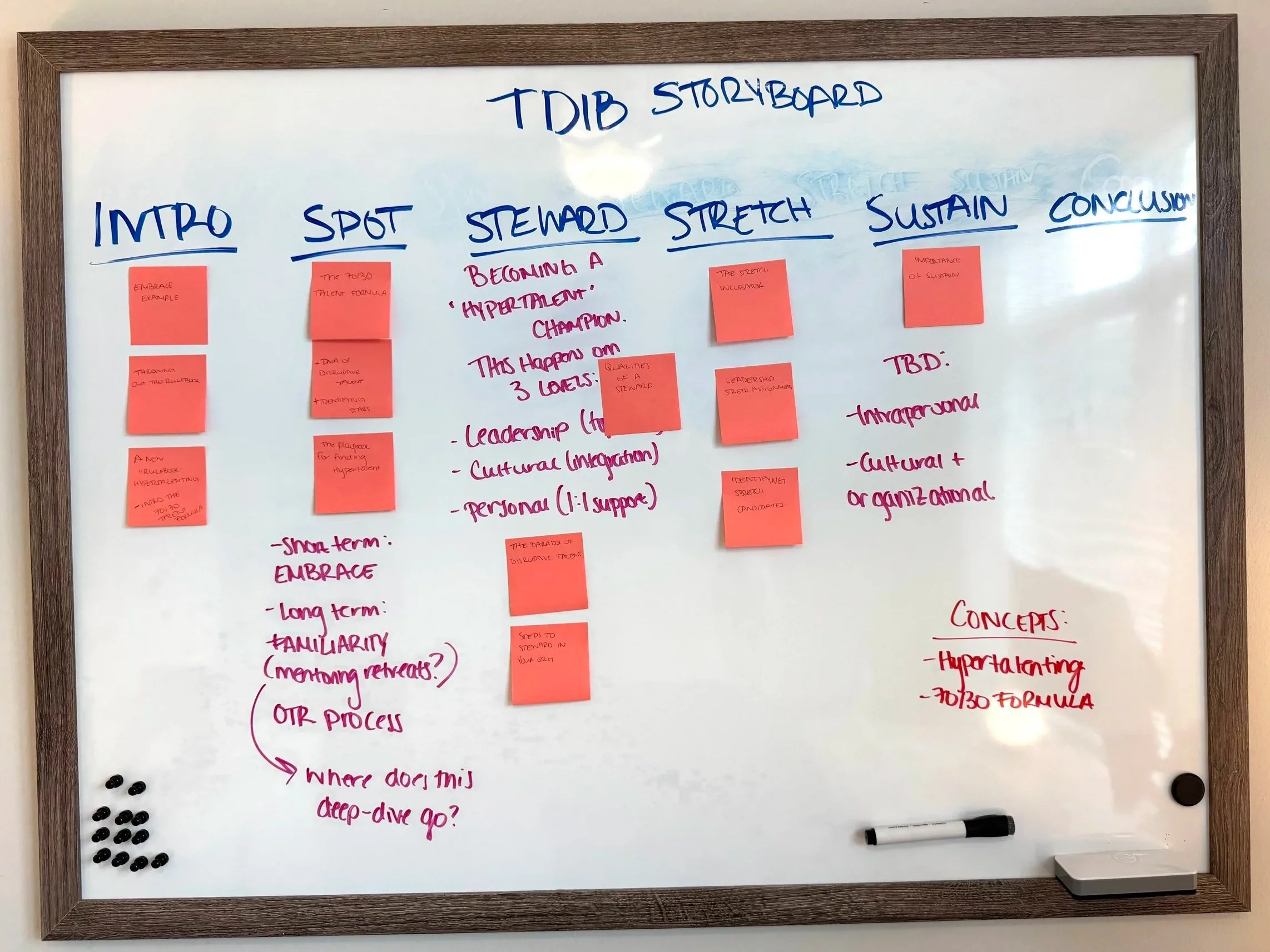
To be clear, the best time to be organizing your ideas like this is in the beginning of the book process. Which is exactly what we had done when I took them through my outlining formula. But sometimes, even with the best planning and outlining, ideas evolve as you move through them. Of course this is a natural part of the process – so sometimes it takes checking in halfway through the process to be sure that everything is coming together in the best way.
In this case, the ideas were there but they were coming up in the wrong order. So, I spent that night reworking the outline, re-ordering some of the chapters, and discovering the gaps that were still needed. Coming out of this reset we had a plan for new chapters that needed to be interviewed/written and an altogether more cohesive story.
Also, to add – this is what I love about my job. The excavation of an idea or strategy until it is just right. It is moments like these that are so helpful to have an outside perspective on your side, like a book coach or ghostwriter. The crossroads you reach where you might need to change course is inevitable. Having someone there to help you work through it and keep you moving is essential to not getting completely stuck by this hurdle in the process.
💡 Your Takeaway
Start with a plan.
There are countless resources available that advertise themselves as helping you write your book. 30-day writing challenges, accountability partners, etc. The problem with these resources is that they rely so much on the writing process and less on the organization of ideas.
In fact, the organization of ideas is the most important step of the journey and will save you so much time in bringing your book to life. When you spend more upfront time on organization, outlining, and planning – that is what makes your book the most successful and the most seamless to actually write.
When I first met the co-authors of Talents Do It Better, they had a brilliant idea for a business book but they were struggling with how to organize their concepts and put words to their ideas.
Each of these authors had industry-leading reputations and successful careers in human resources, business development, and executive coaching. The engine behind their success was a shared approach to talent development, which would ultimately become the foundation of their book.
They had the bones of a powerful method and the real-world case studies to back it up. What they needed was the right person to help shape those ideas into a compelling narrative and guide the project to completion amid the demands of busy careers and personal lives.
This is where our journey together began and eventually turned into one of the most fulfilling projects of my career as a book coach and ghostwriter.
Publication and Wins!
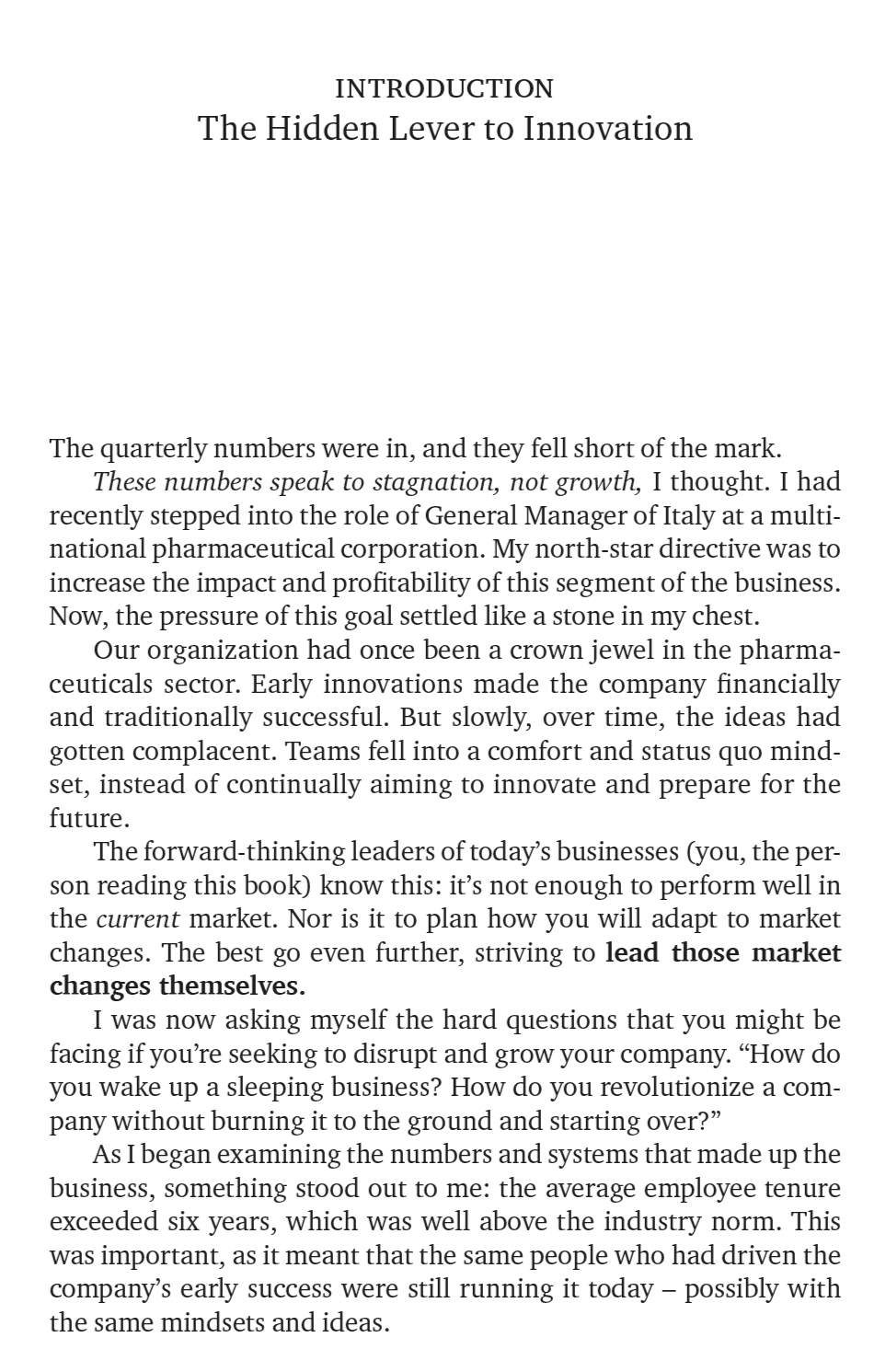
Book Sample
I'm Allegra, a nonfiction book coach and ghostwriter.
Through these client case studies, I share the behind-the-scenes stories of how I've helped authors transform their ideas into published books.
If you're interested in support for your own book project, I'd love to learn more about your goals. Book a consultation to discuss your book and explore how I can support you as your book coach or ghostwriter.